
Full Arms
- Home
- >>
- Beauty Services
- >>
- Full Arms

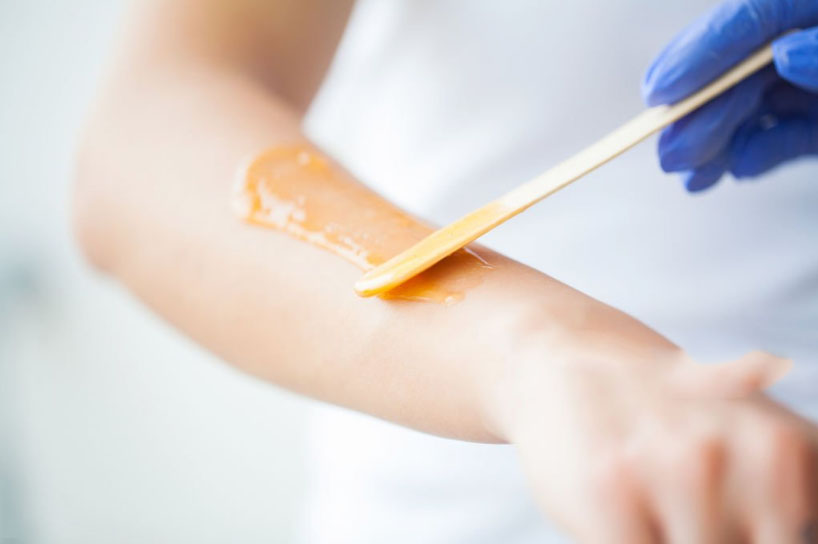
Brand: Full Arms
Full arms refer to the entire length of the arms from the shoulders down to the wrists, including the upper arms, elbows, forearms, and hands. They are essential for movement, strength, and performing daily tasks
The full arms encompass the entire length of the upper limbs, extending from the shoulders to the wrists and including the upper arms, elbows, forearms, and hands. This complex anatomical region is crucial for a wide range of movements and functions, enabling humans to interact with their environment in diverse and sophisticated ways.
Structurally, the arms consist of bones (humerus in the upper arm; radius and ulna in the forearm), muscles, tendons, ligaments, blood vessels, nerves, and skin. The shoulder joint connects the arm to the torso, allowing a broad range of motion, while the elbow acts as a hinge facilitating bending and straightening of the arm. The forearm supports movements such as rotation (pronation and supination), which are important for hand positioning and dexterity.
Muscles in the arms enable strength and precision, allowing for tasks ranging from lifting heavy objects to fine motor skills like writing or manipulating small tools. The hands, as part of the full arms, are highly specialized with numerous bones and muscles supporting grip, sensation, and complex movements.
The arms also play a vital role in non-verbal communication through gestures and body language. Additionally, they are a common focus in fitness, rehabilitation, and cosmetic treatments due to their functional importance and aesthetic visibility.
In summary, the full arms are essential anatomical structures that combine strength, mobility, and sensitivity, enabling humans to perform a wide array of physical activities and express themselves physically in social contexts.


